
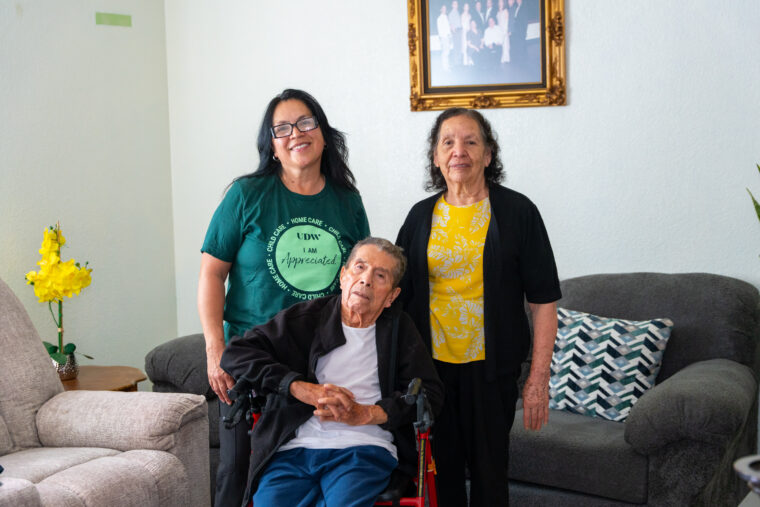
Laura was born in Uruapan, Michoacán and moved to Tijuana at eight years old, where she lived for the next 22 years. During that time, she and her family frequently traveled to the United States with their visas, crossing back and forth as part of their routine. “We had spent years visiting the U.S., crossing through Tijuana with our visas, so when it came time to move for good, the transition felt natural for me and my family,” she says. After four years living in Orange County, she was looking for a place where she could build a life for herself and her family.
She didn’t know then that Bakersfield would become the heart of her caregiving journey.
Her path into caregiving began unexpectedly in 2022, when she met an unhoused man named Leobardo Juarez near her home. He had lost his vision, his stability, and his home. Laura offered him a safe place to rest and made sure his basic needs were met, eventually helping him access the care he needed. “I would take him to all his medical appointments, and that’s where I first learned about the In‑Home Supportive Services (IHSS) program,” she says.
Laura didn’t stop there. She later began caring for another blind woman as well. Sadly, both clients passed away, but the impact they had on her will stay with her forever.
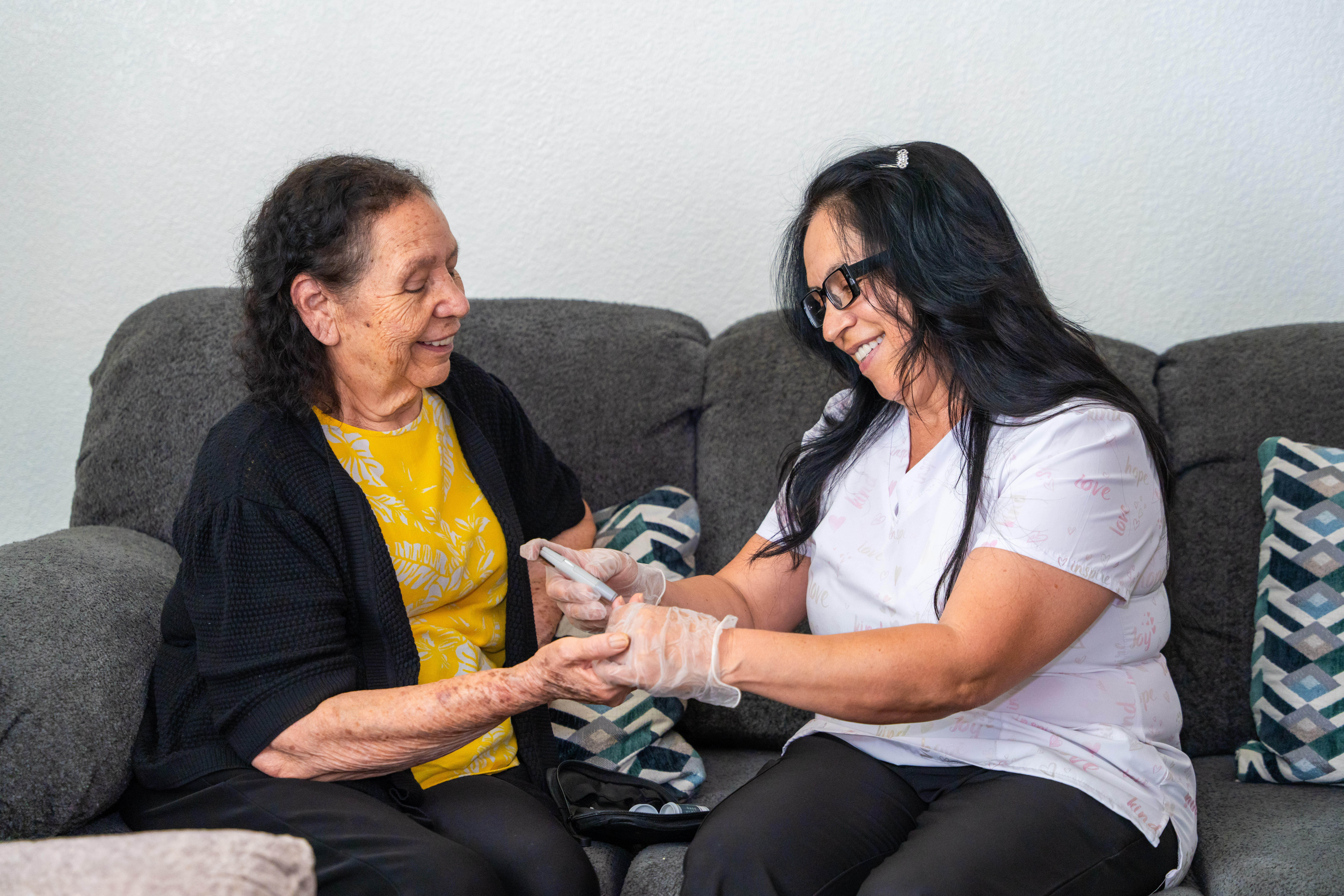
Today, Laura’s caregiving is centered on her parents, who depend on her for every part of their daily lives. Her father lives with the effects of multiple strokes, severe mobility issues, incontinence, and chronic health conditions. Her mother has diabetes and poor balance, and relies on Laura to manage her medications, diet, and safety. For the past four years, Laura has been their primary caregiver. A role she takes on with love, patience, and dedication.
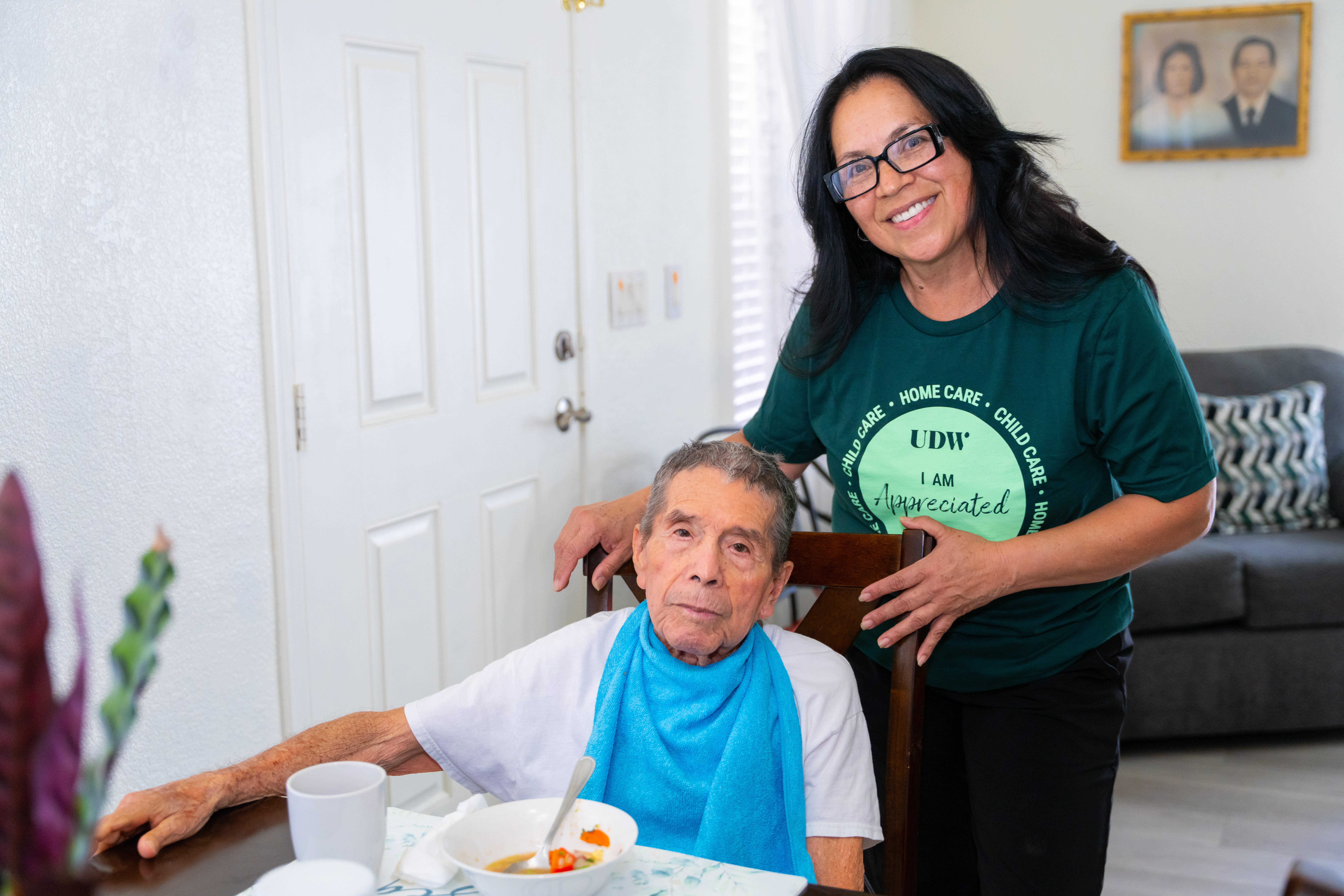
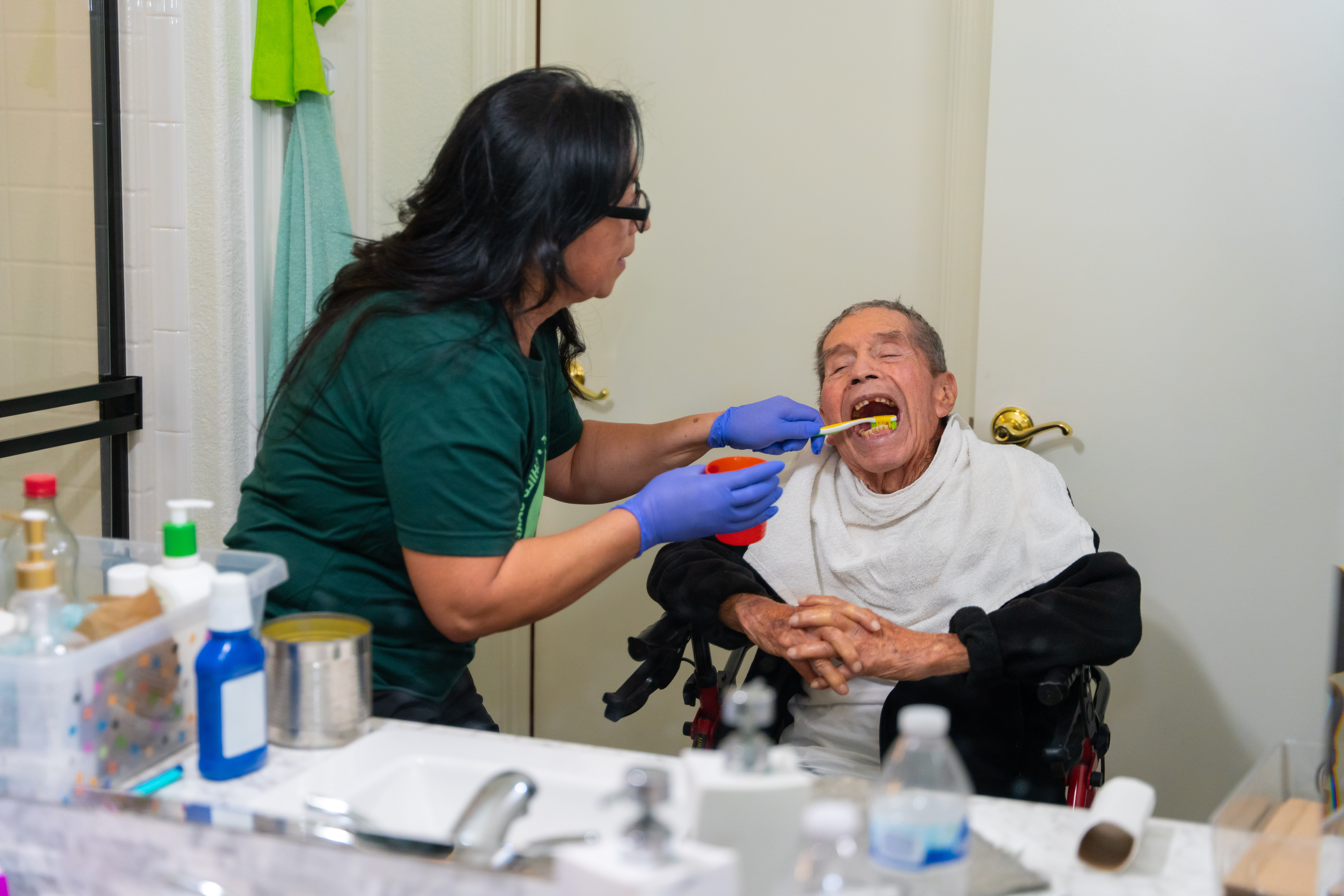
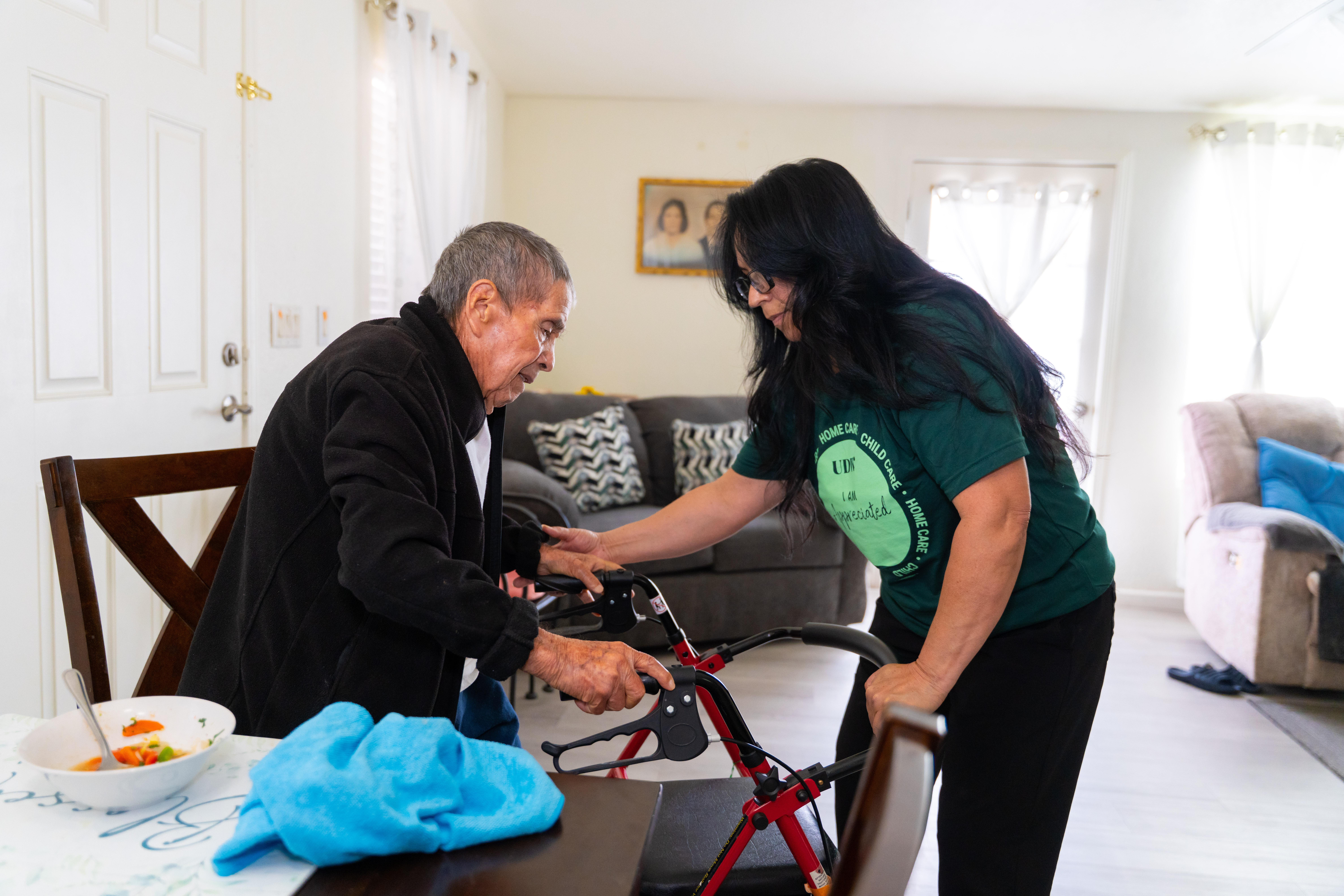
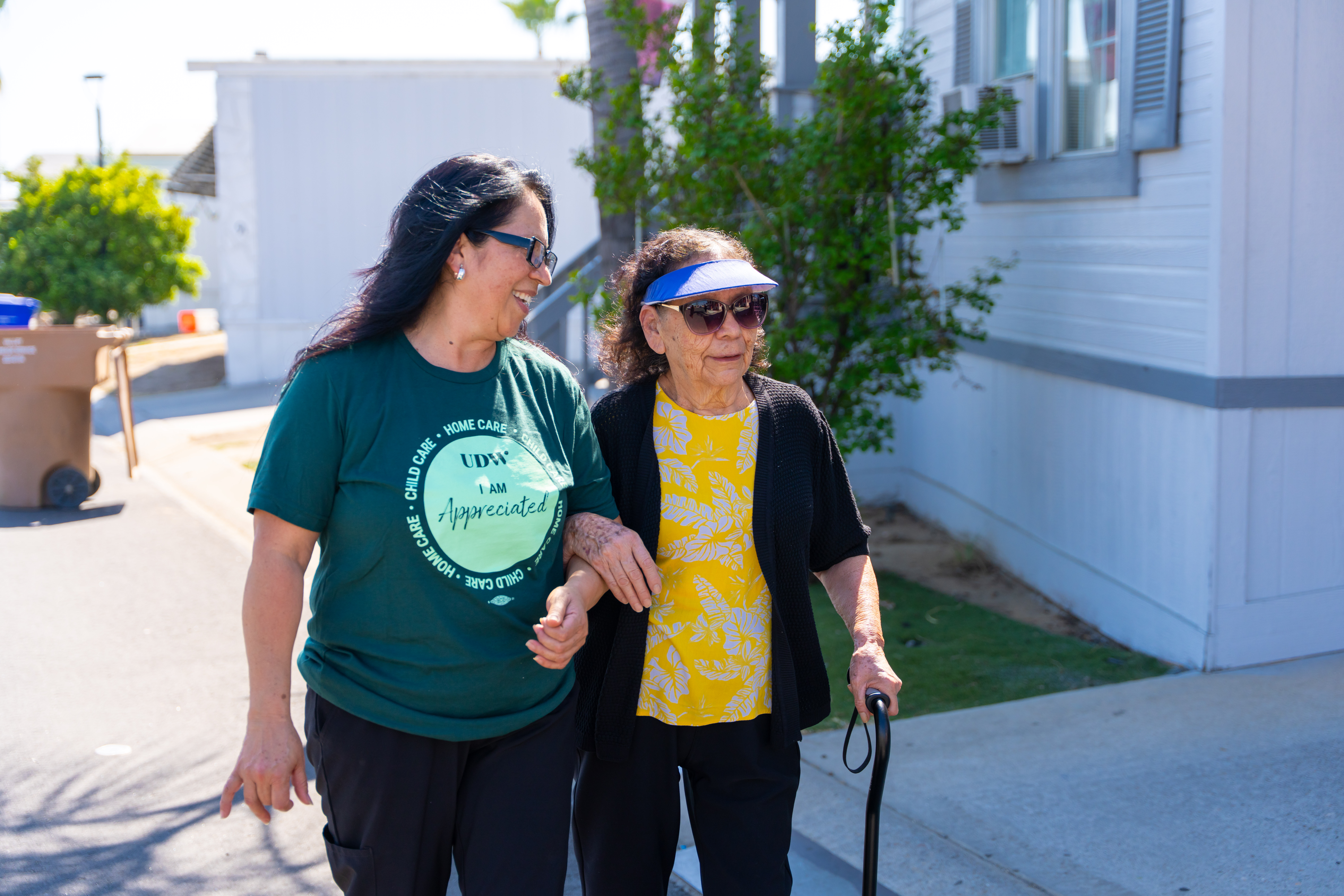
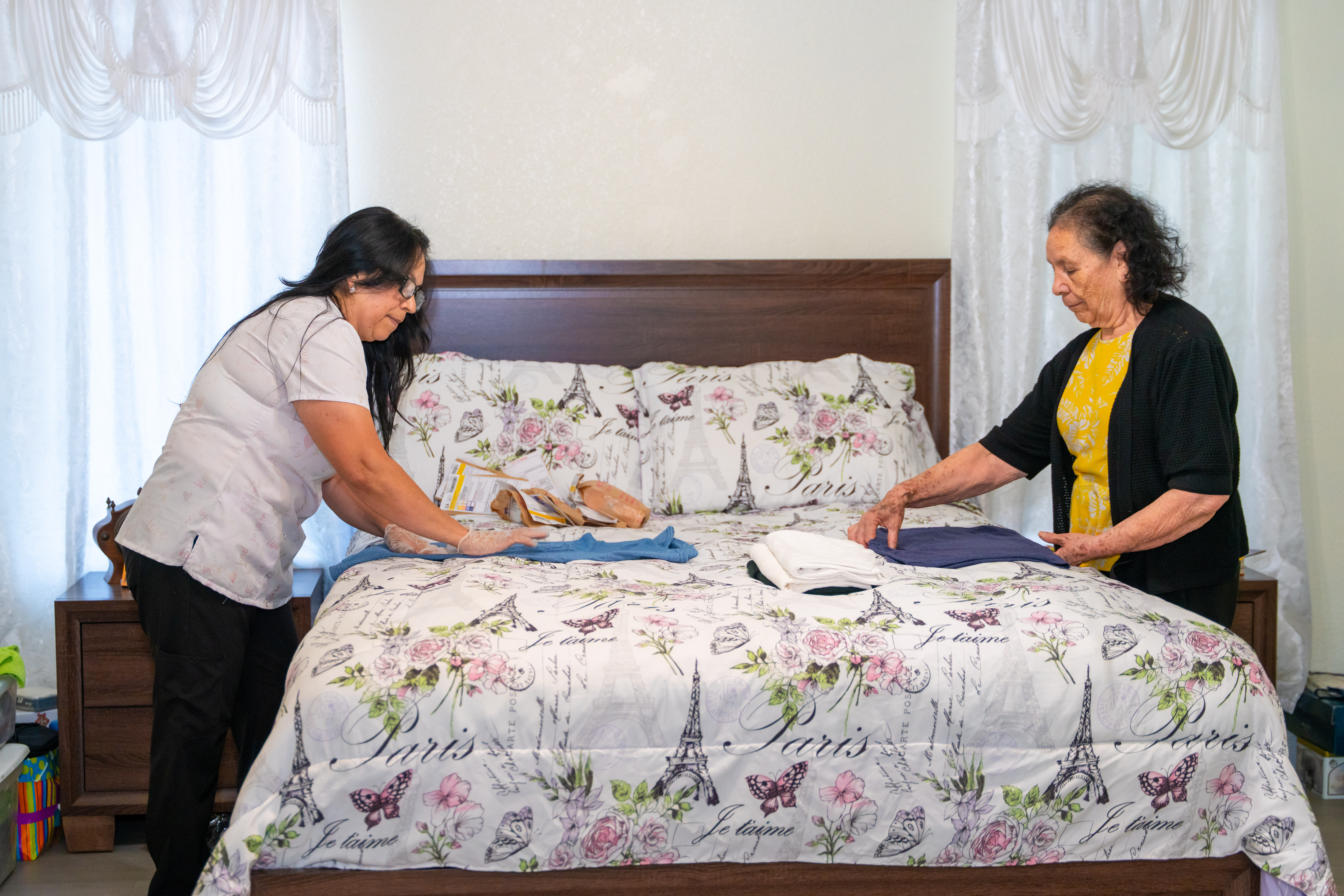
Her days begin as early as 5:30 am. Her father expects to be seated at the table by 6:30 “like a clock,” she says. She helps him clean up, change clothes and diapers, walk with his walker, and eat breakfast so he can take his medications. The rest of her day is a balance of cooking, monitoring, walking, supervising, and managing medical needs. Evenings include grocery runs, meal prep, and safety checks.
Laura doesn’t find being the primary caregiver for her parents difficult, but she does feel defeated at times because her parents are complete opposites in their conditions and capabilities. And they struggle with accepting their condition. “My dad doesn’t have a problem listening to my direction. He can be stubborn and not always like what I have to say, but he listens because he knows I want what’s best for him. My mom, on the other hand, will just act like everything is fine. I have to remind her that it’s okay to take her medications, and it’s okay to be honest with us about how she’s really feeling,” she says.
The demands of this work reach far beyond her emotional and physical energy, reshaping her personal and professional life. Caring for her parents meant giving up most of her income as a barber and cosmetologist, and she now earns only a fraction of what she once did. Although she’s grateful for the IHSS program, the hours don’t reflect the time she actually spends. The long days pulled her away from full‑time work and from routines she once enjoyed. “I’m not able to just wake up and go to the gym or go somewhere like before, and I can’t keep working in barbering or cosmetology the way I used to,” she says.
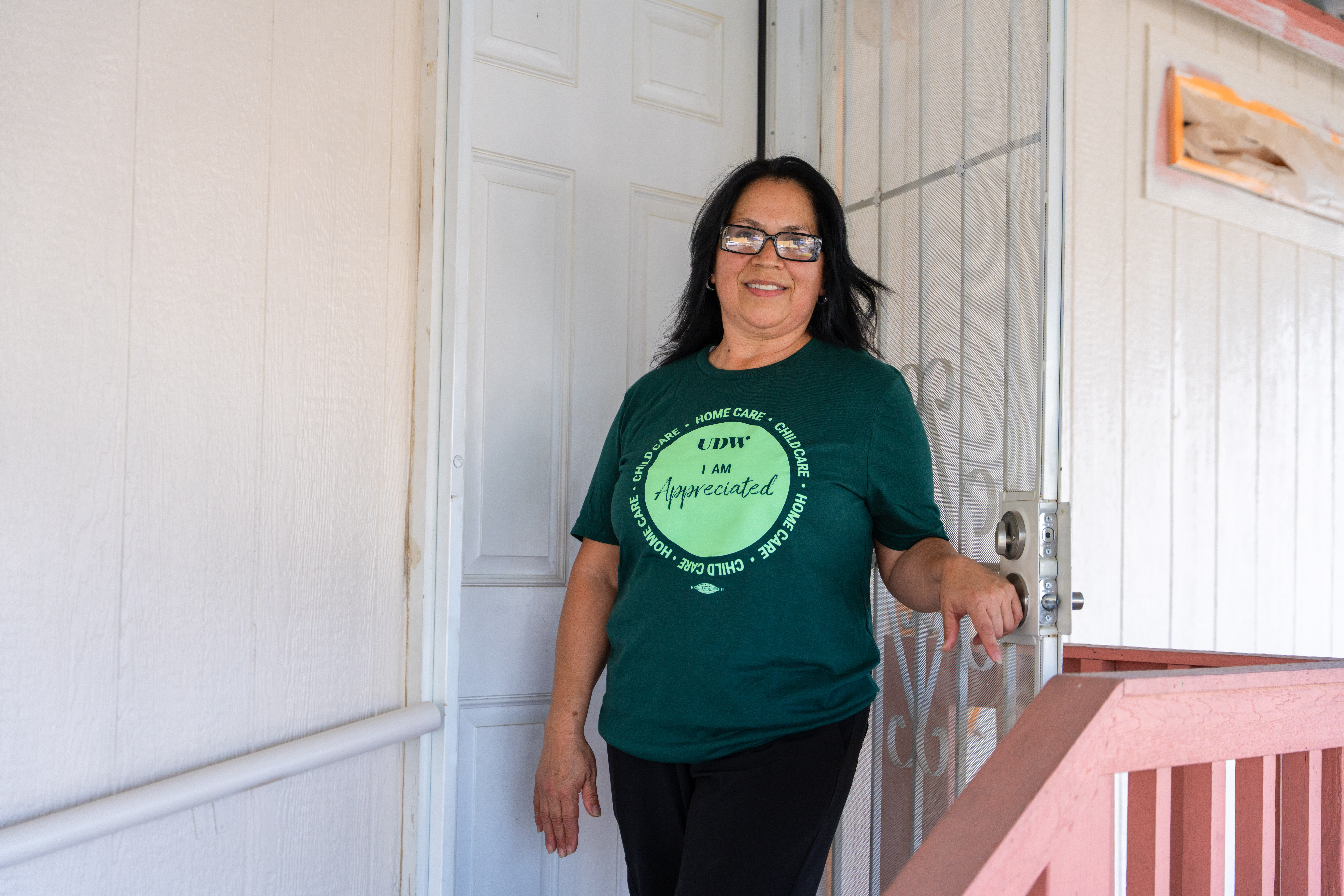
In her work as a barber, she’d hear stories from clients who were struggling to care for loved ones without pay, support, or reliable information. After learning about resources through UDW, she began helping people apply for IHSS and encouraging them to join the union so they could access more support. She did it because she loves helping people and wants others to avoid the hardships she faced. “UDW helped me become a connector, a resource, and a trusted advocate in my neighborhood. Someone people turn to when they don’t know where else to go.”
She is also committed to fighting for the future of caregiving: protecting Medicaid/Medical and IHSS from cuts, raising wages for caregivers in underpaid counties like Kern, and winning real benefits like medical coverage, disability, and retirement.
“Caregiving is not easy. It’s long nights, showers, diapers, medications, and worrying about every little thing. We give everything to keep our families safe, and all we are asking for is to be seen, respected and understood.”

Discover more inspiring member stories at udw.org/our-stories.