
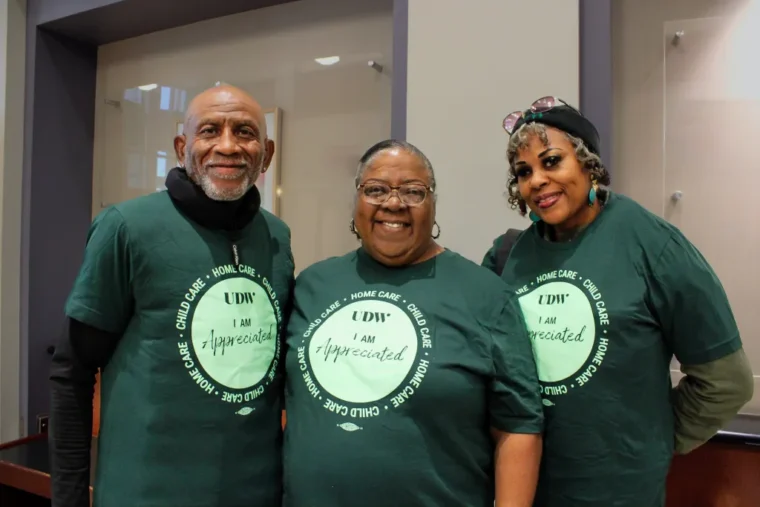
When Rachel Terry talks about voting, she speaks as someone who has felt its impact firsthand. At 55, as a Black woman, a longtime caregiver, and a leader in her union’s political council, she sees voting as a direct connection between the struggles of her ancestors, the survival of her family, and the future of the care workers she stands beside.
Her relationship with politics began almost accidentally. Growing up before streaming and endless TV options, she watched whatever was on, including political shows, because there wasn’t much else. She remembers late‑night TV signing off, the American flag filling the screen, and her mother yelling at the news. “My mom was kind of political… I used to see her in there yelling at the TV and talking, and it just caught my attention.”
As she grew older and raised three children, that curiosity became a responsibility. She learned what Black communities endured just to win the right to vote. “To have the right to vote, there’s no way I can sit down and not get up and vote… They fought hard. They lost their lives… I feel it’s my American duty to get up and keep their fight going.”
Her voting journey deepened when she became active in UDW. Like many people, she once focused mostly on national elections. But attending local meetings opened her eyes to how county‑level decisions could reach directly into her home. She recalls sitting in a Riverside County Board of Supervisors meeting where residents spoke against a contract they believed would harm them. The board listened and then dismissed them. “There were so many constituents there… and the board of supervisors kind of said, you know, it is what it is.”
She remembers thinking about how decisions made in that room would show up in her monthly expenses. “My gas bill… my light bill, my trash… this affects me. And this guy just sat here and said, ‘It is what it is.’ What do you mean, ‘It is what it is?’” That moment pushed her deeper into political work. She joined UDW’s political council, canvassed, talked to voters, and learned how much power care workers have when they understand what’s at stake.
Now, Rachel teaches her children and her community to vote with intention. She still remembers sitting with her kids during President Obama’s last election, going through every part of the ballot together. “We got to sit around as a family and read through every ballot. We looked it up so that we can understand.” Her children were proud and they’ve voted in every election since.
That same urgency shapes how she talks to care workers about the upcoming primary. She is clear about what’s on the line for IHSS providers. “This upcoming primary, we have no choice but to get up and vote, because right now, our program is barely hanging on… Anytime that there’s any cuts to come to anywhere, the first thing they’re going to come after is IHSS and Child Care.”
She has seen how quickly the IHSS program can be targeted for cuts, how easily hours can be reduced, and how policy changes can threaten whether family caregivers are even allowed to be paid. And that’s why she believes care workers must support UDW‑endorsed candidates — leaders who understand IHSS, value care work, and are committed to protecting and expanding the program. “Right now, we have the opportunity to put a champion in the office that’s going to support us and fight for our program. And if we do not… we do not stand a chance.”
She tells care workers who feel powerless to look at what’s happening around them — rights being rolled back, programs threatened, families left vulnerable. “We can take our power back, and we can stand and we can fight for this program, and your vote always counts.”
For Rachel, voting is about showing up for her family, her community, and every care worker whose livelihood depends on decisions made in rooms they may never enter. Through their vote, she believes, care workers can still be present in those rooms. And in this upcoming primary election, she wants every care worker to show up, stand up, and be counted.